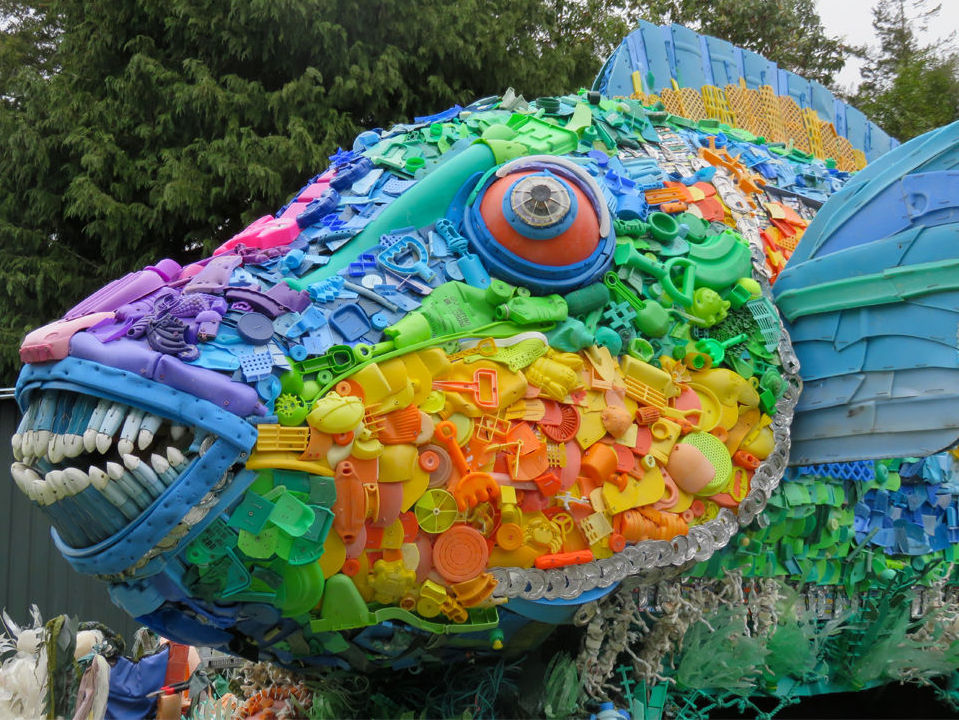
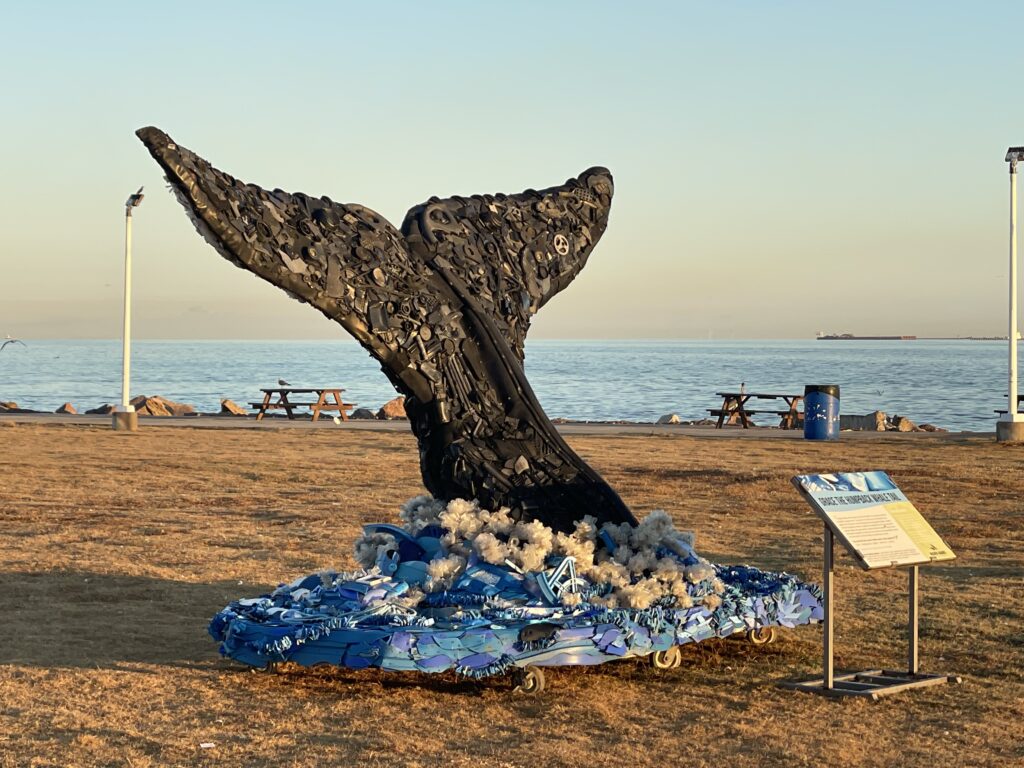
Washed Ashore’s Education Hub provides educators, parents, grandparents, caregivers, and curious learners with meaningful tools to spark dialogue and inspire action to protect marine wildlife. By blending art with environmental education, we engage diverse audiences in ocean conservation.
BRING OCEAN LEARNING TO LIFE
Our curriculum resources make it easy to bring ocean conservation to life in the classroom, at home, or within community learning groups.
Ocean Activity Book Curriculum
Designed to complement our Ocean Activity Book, this flexible curriculum provides educators and caregivers with lesson extensions, discussion prompts, and hands-on projects that make learning about the ocean fun and impactful.
Developed in partnership with the NOAA Marine Debris Program, this standards-aligned curriculum connects art and science to teach about marine debris, ecosystems, and creative problem solving.
Go beyond the sculptures to discover inspiring stories of marine life that inspire Washed Ashore’s artwork. Learn about their habitats, the environmental challenges they face, and practical ways you can become their advocate.
Participate in local cleanups and sustainability projects.
EDUCATE OTHERS
Share what you know to spread ocean conservation awareness.
PLASTIC POLLUTION FACTS
Our Plastic Footprint Is Massive
About 300 million tons of plastic waste are created every year, and only around 9 percent is recycled. Most of it ends up in landfills, waterways, and the ocean, where it can persist for hundreds of years.
FACT 1
Millions of Tons Enter the Ocean Each Year
More than 11 million tons of plastic flow into the ocean annually, carried by rivers, wind, and runoff into large ocean currents called gyres. These swirling systems collect and spread debris across the world’s seas, creating a global “plastic soup.”
FACT 2
Marine Life Mistakes Plastic for Food
Over 100,000 marine mammals and countless seabirds die each year after ingesting or becoming entangled in plastic waste. If trends continue, scientists warn there could be more plastic than fish (by weight) in the ocean by 2050.
FACT 3
Tiny Plastics, Big Impact
Microplastics (fragments smaller than 5 millimeters) are now found everywhere, from surface waters to deep-sea sediments. These particles can enter the food chain and have even been detected in human blood and lungs.
FACT 4
Plastic Pollution Affects Us All
Plastic doesn’t just harm marine life, it affects people and economies too. It contributes to climate change through greenhouse gas emissions and damages coastal communities that rely on healthy oceans.
FACT 5
Together, We Can Inspire Ocean Stewards of Tomorrow
Support Ocean Education with Washed Ashore
Interested in amplifying ocean education? Consider sponsoring our initiatives through a partnership or make a donation today. Your support helps us inspire global environmental awareness and action.
Washed Ashore’s traveling sculptures are proven to increase visitor attendance, attract media exposure and generate enthusiasm for your educational programming. Spaces are limited, get in touch to book Washed Ashore at your venue today.